
Akihito
125th Emperor of Japan who reigned during the Heisei era.

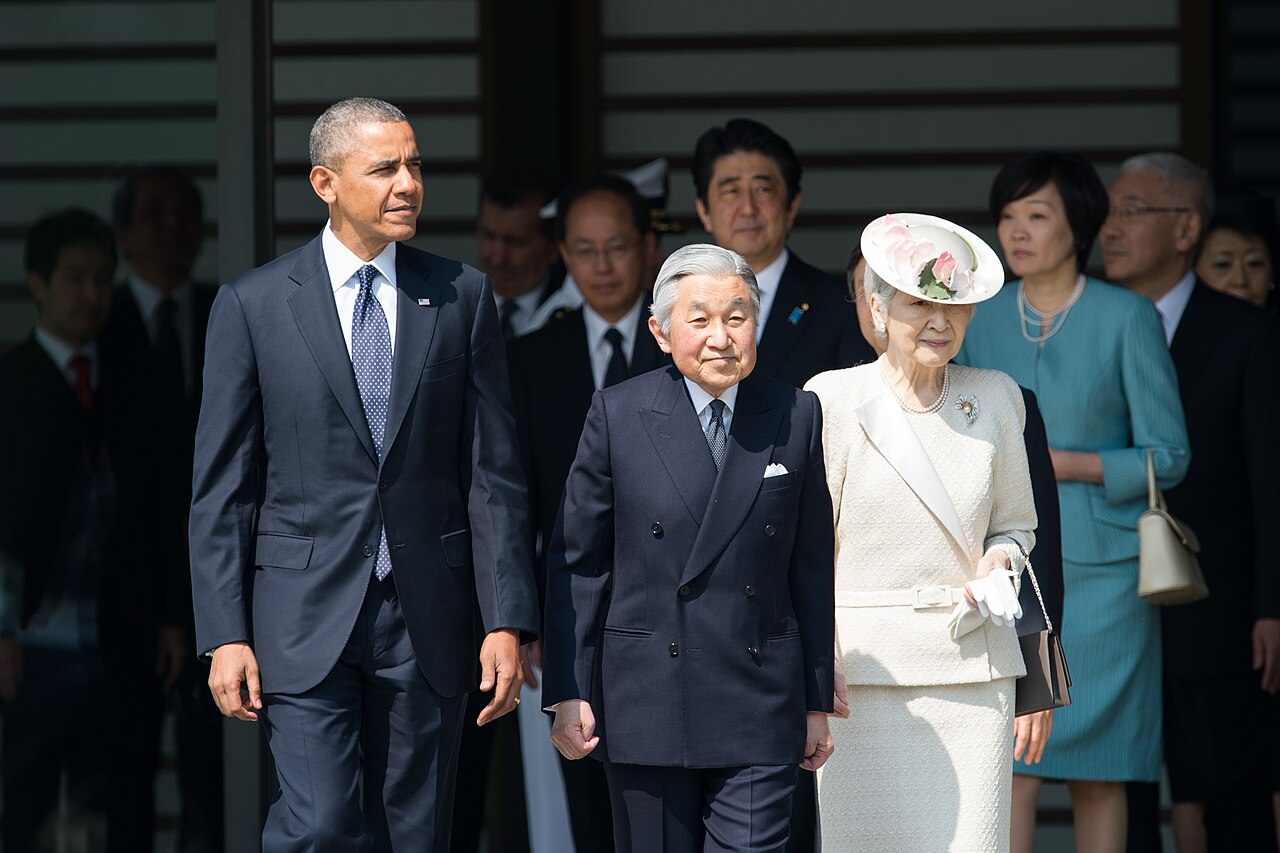
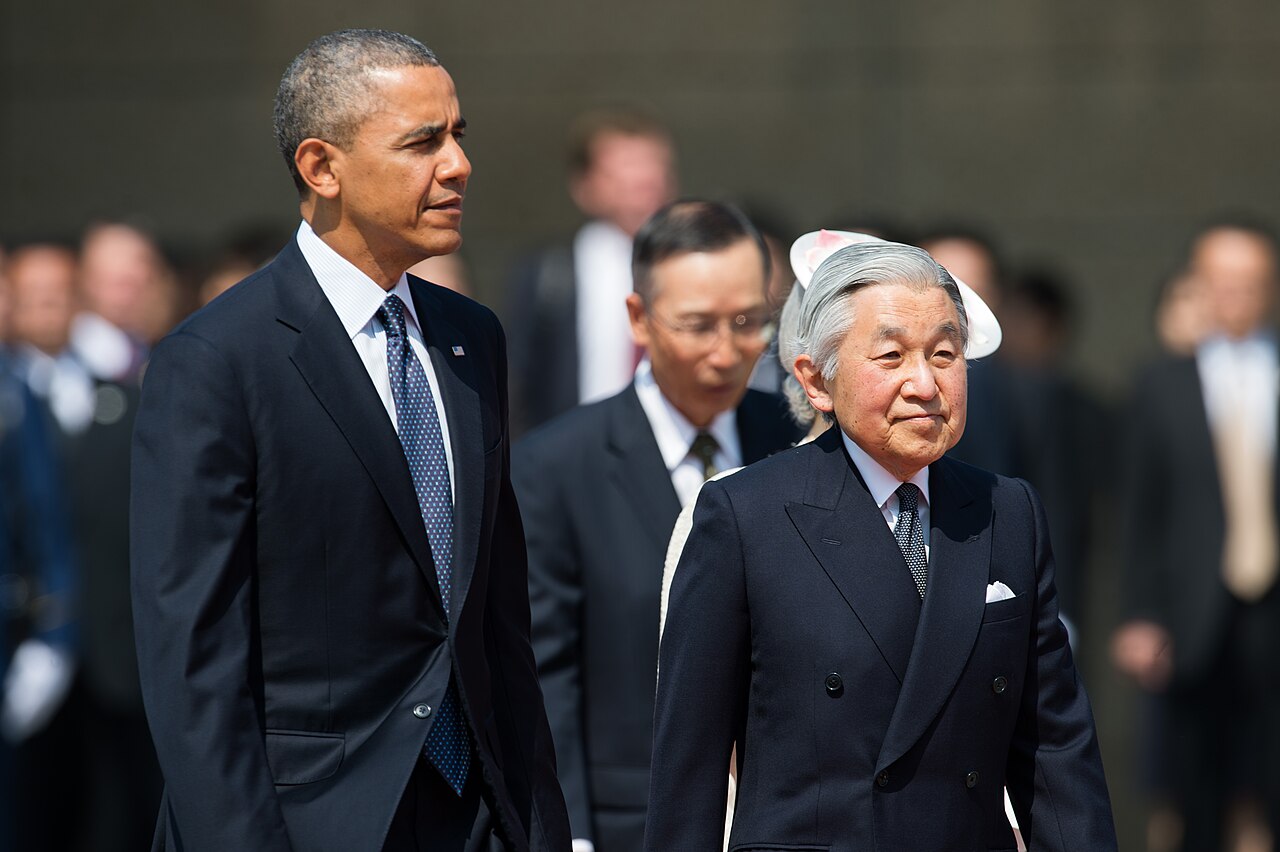
State Department photo by William Ng / Public domain East Asia and Pacific Media · Public domain
His rule was named the Heisei era, an expression of achieving peace worldwide, and he is noted for efforts to bring the imperial family closer to the Japanese people.
- field
- Monarch
- nationality
- Japanese
- known_for
- 125th Emperor of Japan; Heisei era; first emperor to abdicate in over two centuries; longest-lived verifiable Japanese emperor
Lore & Background
Akihito was born as the fifth child and second son of Emperor Hirohito and Empress Kōjun (his older brother, Prince Teru, died in infancy before Akihito's birth, making him the first surviving son). During World War II, he was evacuated from Tokyo and remained in Nikkō until Japan's surrender. He was tutored in English and Western manners by Elizabeth Gray Vining during the Allied occupation. The couple had three children: Naruhito, Fumihito, and Sayako. As crown prince, he made official visits to thirty-seven countries and expressed a desire to bring the imperial family closer to the people. He made official visits to all forty-seven prefectures of Japan and many remote islands. He abdicated in 2019 due to advanced age and declining health, assuming the title Emperor Emeritus.
Reader's Guide
Akihito's reign marked a significant shift toward a more modern, accessible monarchy. He broke tradition by marrying a commoner and by making extensive public visits across Japan, including remote islands. He also visited World War II battlefields abroad, honoring all casualties. By never visiting Yasukuni Shrine, he continued a boycott due to its enshrinement of war criminals. His abdication in 2019 was the first by a Japanese emperor in over two centuries, setting a precedent for future succession. At age 92, he is the longest-lived verifiable Japanese emperor in recorded history. His legacy includes a more humane imperial role, a focus on peace, and a bridge between tradition and contemporary society.
Did You Know?
- He abdicated in 2019, the first Japanese emperor to do so in over two centuries.
- He is the longest-lived verifiable Japanese emperor in recorded history, at age 91 (as of 2025).
The Heisei Reign: A Bridge Between Palace and People
Akihito ascended to the Chrysanthemum Throne on 7 January 1989 following the death of his father, Emperor Hirohito, and was formally enthroned the following year. His thirty-year reign carried the era name Heisei, a phrase meaning the achievement of peace across the world. Rather than remaining a distant figure behind palace walls, Akihito deliberately worked to narrow the gap between the imperial institution and ordinary Japanese citizens. He traveled to every one of Japan's forty-seven prefectures and ventured to numerous remote islands, making the imperial presence visible in communities that had never before hosted an emperor. His personal passions—natural history, conservation, and both Japanese and global history—shaped the tone of his public engagements. Over the course of his rule, seventeen different prime ministers held office across twenty-five separate terms, beginning with Noboru Takeshita and concluding with Shinzo Abe. Throughout all of this political turnover, Akihito maintained a steady, unifying presence, embodying continuity for a nation in constant flux.
A Tennis Court Romance That Shattered 2,600 Years of Custom
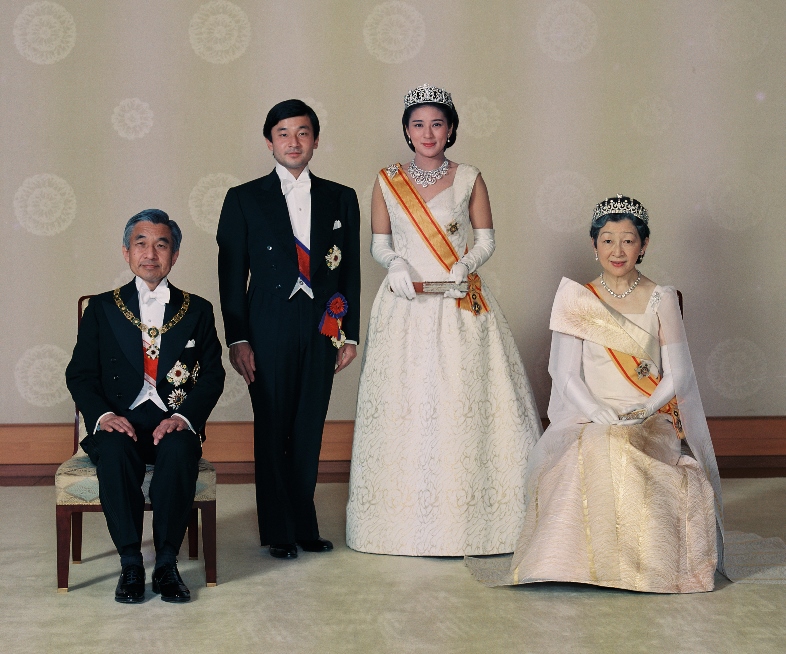
The pairing immediately drew skepticism: Michiko was a commoner from a Catholic-educated family, and traditionalist voices questioned her suitability for the heir to the throne. Undeterred, Akihito reached out to King Baudouin of Belgium, asking the young monarch to relay his messages to Michiko. Baudouin went further, personally negotiating with the Emperor and arguing that a Crown Prince who was genuinely happy would become a better emperor. The ceremony was broadcast on television for the first time, capturing the attention of roughly fifteen million Japanese viewers. Together, the couple went on to raise three children—Naruhito, Fumihito, and Sayako—and made official visits to thirty-seven countries.
A Childhood Forged in War and Shaped by Western Tutors
Titled Prince Tsugu in his earliest years, he was raised under private tutors before entering the Peers' School (Gakushūin) for his elementary and secondary education. In the postwar occupation period, he was tutored in English and Western manners by Elizabeth Gray Vining, an experience that would shape his later diplomatic engagements. At his father's explicit request, Akihito was never commissioned as an army officer—a deliberate break from the path of his predecessors.
Abdication, Longevity, and a Living Legacy
On 30 April 2019, Akihito stepped down from the Chrysanthemum Throne, citing his advanced age and the gradual decline of his health. He assumed the title Jōkō, officially rendered in English as Emperor Emeritus, and was succeeded by his elder son Naruhito, whose reign opened the new era of Reiwa. The abdication marked a historic moment, representing the first voluntary relinquishment of the throne in over two centuries. At the time of his abdication, Akihito was already the longest-lived verifiable Japanese emperor in recorded history, and he would go on to reach the age of ninety-two. Following the death of Yuriko, Princess Mikasa, in November 2024, he became the oldest living member of the Imperial House of Japan. Throughout his entire reign, he was never addressed by his personal name; the only forms of address permitted were His Majesty the Emperor, the Emperor, or His Majesty. By custom, he will be posthumously designated Emperor Heisei, the 125th sovereign of Japan, a name that will forever link his thirty-year stewardship to the aspiration of worldwide peace.
Gallery
More in Asian Presidents And Prime Ministers 1-20
Spotted an error? Know more?
This is a living reference — every entry is fact-audited, and reader corrections feed straight into our audit queue. Suggest an edit · See this site's audit record