
Ahmad bin Yahya
Penultimate king of the Mutawakkilite Kingdom of Yemen.

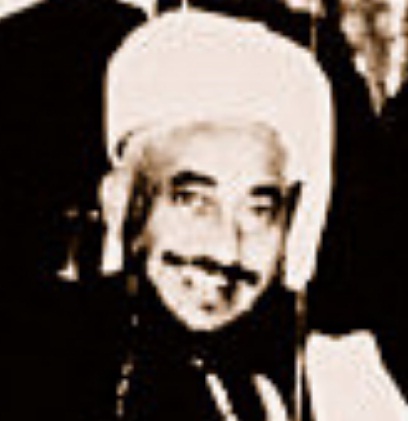
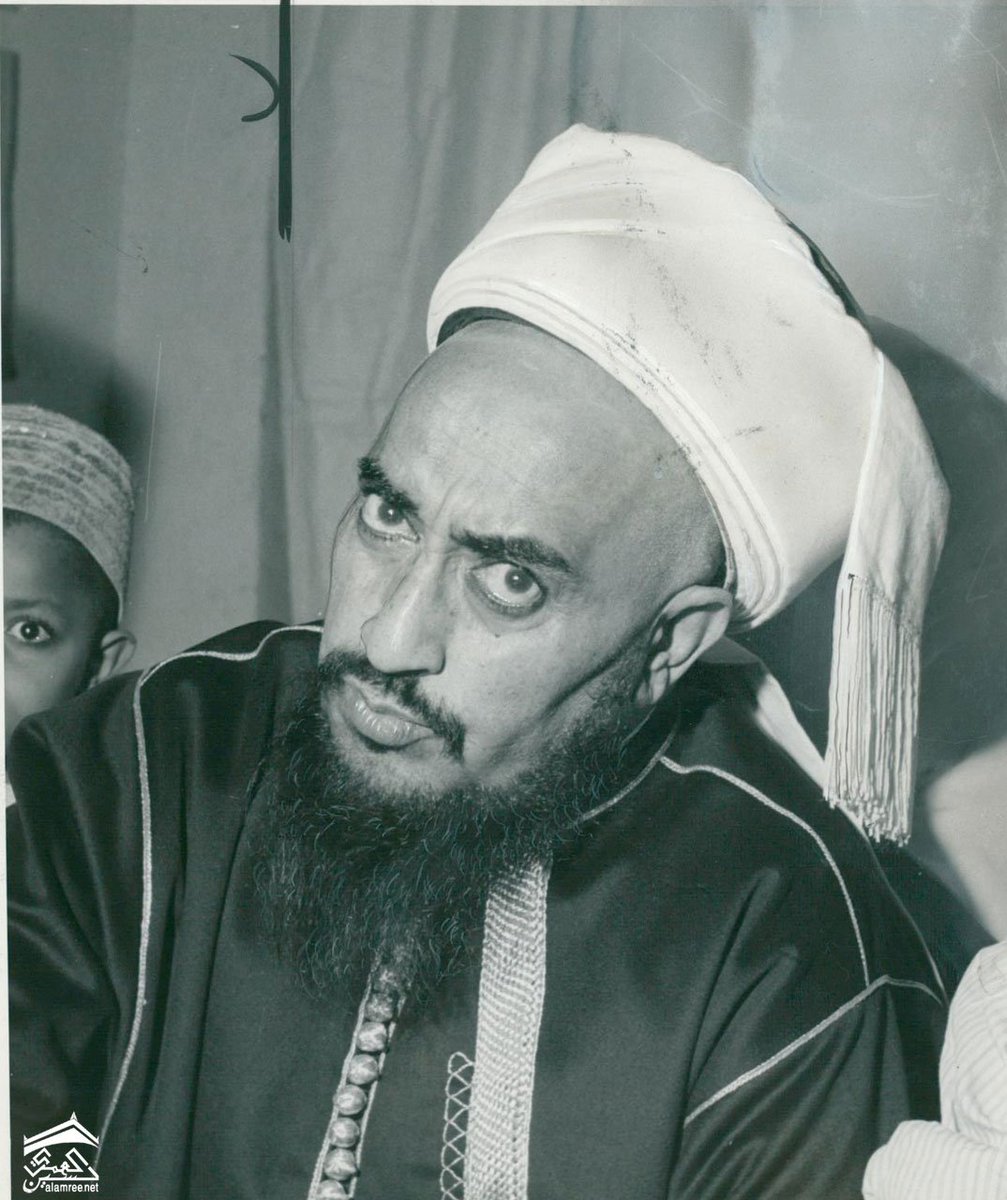
Ahmad bin Yahya · Public domain
His full title was H.M. al-Nasir-li-Dinullah Ahmad bin al-Mutawakkil 'Alallah Yahya, Imam and Commander of the Faithful, and King of the Mutawakkilite Kingdom of the Yemen. His controversial rule led to an attempted coup, assassination attempts, and the downfall of the kingdom shortly after his death.
- field
- Monarch
- nationality
- Yemeni
- known_for
- Penultimate king of the Kingdom of Yemen; known as 'Ahmad the Devil' to opponents and 'Big Turban' among northern subjects
Lore & Background
Ahmad bin Yahya was the oldest son of Yahya Muhammad Hamid ed-Din, of the Hamid al-Din branch of the al-Qasimi dynasty. From his youth he was notable for his strikingly ferocious appearance, being short and stocky with prominently bulging eyes. He wrote poetry but was known for his explosive temper. With support from loyal tribes and his brother Hasan, he ended the short-lived revolutionary government and became Imam. He ruled autocratically from Ta'izz, beheading many conspirators. His rule was marked by drug addiction, mood swings, and a fear of sudden death. He forged alliances with the Soviet Union, China, and Nasserist Egypt to expel the British from southern Yemen, but later turned against Egypt and the Soviet Union, which supported a republican coup against his son.
Reader's Guide
His conservative and autocratic rule, combined with his erratic behavior and drug addiction, alienated many, leading to an attempted coup and assassination attempts. Despite being derided as 'Ahmad the Devil' by opponents, he remained popular among northern subjects who called him 'Big Turban.' His foreign policy aimed at recovering the Aden Protectorate for 'Greater Yemen' led him to ally with the Soviet Union, China, and Egypt, but he later turned against them. His legacy is one of a ruler who, while pursuing territorial ambitions, failed to modernize or stabilize his realm, contributing to the eventual collapse of the monarchy.
Did You Know?
- Ahmad bin Yahya shared the same birthday as his father, the previous Imam.
- He was known as 'Ahmad the Devil' to his opponents and 'Big Turban' among his northern subjects.
- After escaping several assassination attempts, he was known as al-Djinn.
- He was addicted to morphine, which he took for chronic rheumatism.
Ascension Amidst Revolution
As crown prince, he did not inherit a peaceful throne; rather, he seized power with the backing of loyal Zaydi tribes who had long been the backbone of the Mutawakkilite dynasty's authority. The assassination itself was a direct consequence of the authoritarian system his father had maintained for decades, in which the imam appointed his sons to govern various provinces and suppressed dissent through force. Ahmad's rise to power coincided with a significant administrative shift: the capital moved from Sanaa to Taiz that same year, a relocation that would define the kingdom's political geography for the next fourteen years. The new ruler faced a deeply divided population—roughly fifty-five percent Zaydi and forty-five percent Sunni—where the coastal and southern Sunni communities had never fully accepted Zaydi imamic rule. His legitimacy rested almost entirely on tribal loyalty rather than broad popular consent, a vulnerability that would ultimately prove fatal to the dynasty.
Diplomatic Tightrope
Ahmad bin Yahya's foreign policy was shaped by the kingdom's precarious position between competing regional powers. The Mutawakkilite Kingdom, bordered by Saudi Arabia to the north, the British-administered Aden Protectorate to the south, and the Red Sea to the west, had long pursued an isolationist stance following the Saudi-Yemeni war of the 1930s. Yet the geopolitical landscape of the late 1950s made isolation increasingly untenable. The move was less a voluntary alignment than a strategic concession to Egyptian influence across the Arab world. However, the union proved short-lived. This episode underscored the limited autonomy Ahmad wielded on the international stage. Despite the kingdom's admission to the United Nations in September 1947, its foreign policy remained constrained by its dependence on tribal alliances at home and the gravitational pull of larger neighbors abroad. The brief UAS membership also revealed how quickly the balance of power in the region could shift, leaving small states like Yemen vulnerable to the ambitions of their larger counterparts.
The Republic's Coup and Civil War
The end of Ahmad bin Yahya's reign marked the beginning of the kingdom's final chapter. Following his death, his son Muhammad al-Badr assumed the throne, but the transition was catastrophic. Just one week into al-Badr's rule, soldiers led by Abdullah al-Sallal, backed by Egyptian military support, launched a republican coup that overthrew the monarchy and proclaimed the Yemen Arab Republic. Al-Badr fled into the mountainous interior, where he rallied the Zaydi tribes that had sustained the Mutawakkilite dynasty for generations. What followed was a brutal civil war that split the country along both ideological and sectarian lines. Saudi Arabia threw its weight behind the royalist cause, while Egypt committed troops to the republican side, transforming a domestic conflict into a proxy war between regional rivals. The royalist government was progressively squeezed, eventually controlling only the northern portions of the country. The war drained resources, deepened sectarian divisions between the Zaydi north and the Sunni south, and left the kingdom's institutional framework in ruins.
Dissolution and the Aftermath
With Cairo no longer able to project force into the conflict, negotiations between the royalist and republican factions became possible. The terms of the settlement granted the royalists a degree of influence within the new government, a compromise that acknowledged their continued political weight despite the loss of their throne. For Ahmad bin Yahya's legacy, the dissolution represented the final erasure of the absolute monarchy he had inherited and defended. The kingdom's institutions—its tribal governance structures, its Zaydi religious authority, its provincial system of appointed rulers—were absorbed into the republican framework. The capital's history, shifting from Sanaa to Taiz and back, became a footnote in a new nation's narrative. Yet the sectarian and regional divisions that the civil war had intensified continued to shape Yemeni politics for decades to come, a lasting scar from the conflict that ended Ahmad's dynasty.
Gallery
More in Asian Presidents And Prime Ministers 1-20
Spotted an error? Know more?
This is a living reference — every entry is fact-audited, and reader corrections feed straight into our audit queue. Suggest an edit · See this site's audit record